Become Fans

45 million –Hans Lollik Islands, US Virgin Islands

There are plenty of natural beauty on this earth. There are also various kinds of uniqueness in it. all that can be found on this site.

Niagara Falls (Ontario, Canada and New York, USA)

Niagara Falls is a city in Canada 83 184 (per 2008) population in the Niagara River in Southern Ontario Golden Horseshoe.

Bali Island (Gods), Indonesia

Bali is the name of a province in Indonesia and also the name of the largest island that is part of the province. In addition consists of the island of Bali, Bali province consists of the islands smaller in the vicinity

Raja Ampat

Located at the northwestern tip of the Bird's Head Peninsula on the island of New Guinea, in Indonesia, West Papua, Raja Ampat, or King Four, an archipelago of more than 1,500 small islands, cays and shelves around the four main islands Misool, Salawati , Batanta and Waigeo, and small island Kofiau.

Showing posts with label Most Beautiful Flowers. Show all posts

Dec 23, 2010

Passion flower (Passiflora)

Passion flower, or wine passion (Passiflora) is a genus of about 500 species of flowering plants, from the Passifloraceae family namesakes. They are mostly wine, with some being shrubs, and several species of herbs. For information about the fruit of Passiflora plant, see passionfruit. Hollrungia monotypic genus seem to be separated from Passiflora, but further study is needed.
 
The family Passifloraceae is found throughout the world except in Antarctica, and Passiflora were absent from Africa, although many other members of the Passifloraceae family was there (for example, more plesiomorphic Adenia).

Nine types of Passiflora are native United States, found from Ohio to the north, west and south to California to Florida Keys. Most of the other species found in South America, China, and South Asia, New Guinea, four or more species in Australia and a single endemic species in New Zealand. New species continue to be identified: for example, P. pardifolia and xishuangbannaensis P. only been known to the scientific community since 2006, and 2005.

Type of Passiflora have been naturalized outside their native range. As an example, Blue Passion Flower (P caerulea) now grows wild in Spain purple passionfruit (P. edulis) and yellow flavicarpa relative. have been introduced in many tropical regions as a commercial crop.

Calla (Bog Arum, Marsh Calla)

Calla (Bog Arum, Marsh Calla) is a genus of flowering plants in the Araceae family, which contains the singular of species Calla palustris. This original cold climates of the northern hemisphere, in central Europe, east and north (France and Norway eastward), northern Asia and northern North America (Alaska, Canada, northeastern United States borders).Flora von Deutschland, Österreich und der Schweiz 1885.

Hoya (waxflower)

Hoya is a genus of 200-300 species of tropical vines in the family Apocynaceae (Dogbane), originating from South Asia (India east to southern China and south), Australia, and Polynesia. Common names for this genus is waxplant, waxvine, waxflower or simply hoya. The genus was named by botanist Robert Brown, in honor of his friend, botanist Tommy Hoy

Gardenia

Gardenia is a genus of 142 species of flowering plants from the coffee family, Rubiaceae, native to tropical and subtropical Africa, southern Asia, Australasia and Oceania. Some species occurred in Hawaii, where gardenias or Nanu.Genus called Nau was named by Carl Linnaeus after Dr Alexander Garden (1730-1791), an American naturalist born in Scotland.

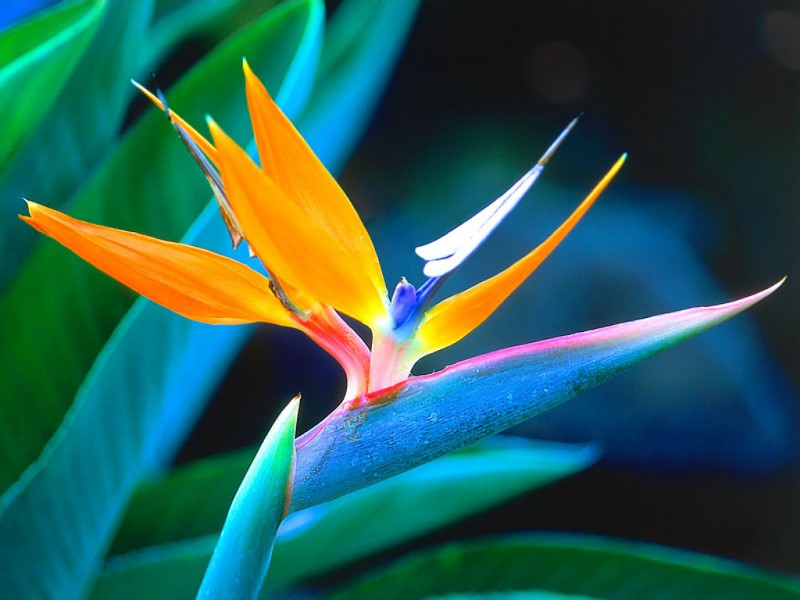
Strelitzia reginae (Crane Flower or Bird of Paradise)

Strelitzia Reginae is a monocotyledonous flowering plant indigenous to South Africa. Common names include Strelitzia, Crane Flower or Bird of Paradise, though these names are also collectively applied to other species in the genus Strelitzia. Its scientific name commemorates Charlotte of Mecklenburg-Strelitz, queen consort of King George III.

Canna (Canna Lily)

Canna (or Canna lily, lily, although not correct) is a genus of the nineteen species of flowering plants. Living closest relationship with cannas are the other plant families of the order Zingiberales, namely ginger, banana, marantas, heliconias, strelitzias, etc.

Canna is a genus only in Cannaceae family. As the family has almost universally been recognized by the taxonomists. APG II system of 2003 (unchanged from the APG system, 1998) also recognizes the family, and give to the sequence in commelinids Zingiberales clade, the monocot.

Species that are large, attractive leaves and horticulturists have turned it into a large flowering garden plants and bright. Instead, it is one of world's richest source of starch, and the agricultural crops.

 
Although tropical plants, most of the cultivars have been developed in temperate climates and grows easily in most countries of the world as long as they can enjoy at least 6-8 hours of sunlight on average during the summer. See gallery for photos cultivar Canna Canna cultivars.
Canna name comes from the Celtic word for a cane or reed.


Plants are large perennial plants of tropical and subtropical with rhizomatous rootstock. Leaves broad, flat, alternate, who like the features of this plant, growing from the trunk in a long narrow roll and then unfurl. The leaves are usually solid green but some cultivars have glaucose, brown, maroon, or even leaf variety.
The flowers consist of three sepals and three petals which are rarely noticed by the people, they are small and hidden under extravagant stamens. What seems petals are highly modified stamens or staminodes. The number of staminodes (1 -) .. (3 -4) (with at least one member staminodal called labellum, always present a special staminode, stamen, bears pollen from anther-half A somewhat narrower, 'petal' is the pistil which is connected to an ovary of three chambers.

 
The flowers are usually red, orange, or yellow or a combination of colors, and collected in a inflorescence a spike or panicle (thyrses). Although gardeners enjoy the odd flowers, nature really intended them to attract pollinators collecting nectar and pollen, like bees, hummingbirds and bats. Pollination mechanism is specially striking. Pollen is shed in style while still in bud, and in the beginning of some species and hybrids are also found in anther stigma of being a high position, which means that they are self-pollinating. Then cultivars have lower anther, and depend on pollinators landed on the labellum and touch the stigma first terminal, and then pollen.
Wild species often grow at least 2-3 m (from 6.6 to 9.8 feet) in height but there is wide variation in size among cultivated plants;. Many cultivars have been selected for smaller stature
Canna grow from swollen underground stem, correctly known as rhizomes, which store starch, and this is the main attraction of the crop for agriculture, has the largest starch particles of all plant life.
Canna is the only member of the Class Liliopsida (monocot families) where seed hibernation is known to occur, because the hard seeds, including impenetrable.


The genus is derived from tropical and subtropical New World, the United States from the south (southern South Carolina west to southern Texas) and south to northern Argentina. 

Although all cannas are native to the New World, they have followed the journey of human discovery and some species are cultivated and naturalized in most tropical regions and sub-tropical.

Canna cultivars grown in most countries, even those with territory in the upper Arctic Circle, which have short summers but long days, and rapid growth rate of gardening plant Cannas make them eligible, provided they receive 6-8 hours sunshine every day during the growing season and are protected from the winter.


Cannas first introduced to Europe by C. indica L., which was imported from East Indies, although the species originated from America. Charles de l Ecluse, who first described and sketched C. indica shows the origins of this, and stated that it was given the name of indica, not for plants from India, in Asia, but because this species was originally transported from America: "Quia ex America delata quaeritur sit";. and at that moment, one describing the tropics of the world as the West Indies

 
Banyak kemudian, pada 1658, Pison dijadikan acuan untuk spesies lain yang didokumentasikan di bawah vulgar atau nama umum dari 'Albara' dan 'Pacivira', yang tinggal, katanya, di tempat yang teduh dan lembab, antara daerah tropis; jenis ini Canna angustifolia L., (kemudian direklasifikasi sebagai C. glauca L. oleh ahli taksonomi).

Without exception, all Canna species that have been introduced to Europe can be traced back to America, and can assert with confidence that Canna is solely an American genus. If Asia and Africa to provide some initial introduction, they were only varieties resulting from C. indica and C. glauca cultivars that have been growing for a long time in India and Africa, with both types imported from Central and South America. Canna is a genus of America, as indicated by Lamarck in which he argued that "Cannas are not known to our ancestors, and that only after the discovery of the New World, that they make their appearance in Europe; Since Canna has a cover seeds are hard and durable, the possibility that seeds survive in the right conditions and was found by archaeologists in the Old World If land from India or Africa has produced some of them. they would have been imported before the 1860s into the European gardens.


* Some species and cultivars are widely planted in many parks in the region is temperate and sub-tropical. Sometimes, they also grow as a potted plant. A large number of ornamental cultivars were developed. They can be used in herbaceous borders, tropical plantings, and as a patio or decking plant.
      * International, cannas are one of the most popular garden plants and large horticultural industry depends on the plant.

    
* The canna rhizome rich in starch, and has many uses in agriculture. All plants have commercial value, rhizomes for starch (consumption by humans and livestock), stems and leaves for fodder, young shoots as a vegetable and the young seed as an addition to tortillas.
      * Seeds used as beads in jewelry.
      * The seeds are used as elements to move from kayamb, musical instrument from Réunion, as well as hosho it, pumpkin rattle from Zimbabwe, where seeds are known as seed 'Hota'.
      * In the more remote areas in India, cannas are fermented to produce alcohol.
      * Plants produce fiber - from the trunk - used as a substitute for hemp.
      * A fiber obtained from the leaf used to make paper. The leaves are harvested in late summer after the plant has flowered, they are scraped to remove the outer skin and then soaked in water for 2 hours prior to cooking. The fiber is cooked for 24 h with lye and then beaten in a jar. They make a brown paper brown.

* A purple dye obtained from the seed.
      * Smoke from burning leaves is said to insecticides.
      * Cannas are used to extract many undesirable pollutants in wetland environments because they have a high tolerance of contaminants.
      * In Thailand, Cannas are a traditional gift for Father's Day.
      * In Vietnam, called dong riềng and canna starch noodles used to make plastics, known as Mien dong.

Related Posts Plugin for WordPress, Blogger...
Twitter Delicious Facebook Digg Stumbleupon Favorites More